How to Tell Near Mint vs Lightly Played MTG Cards Apart
A step-by-step guide to help you tell near mint vs lightly played mtg cards apart quickly and accurately.
Near Mint vs Lightly Played is the condition line that causes the most arguments in Magic: The Gathering buying, selling, and trading. The reason is simple: the worst acceptable Near Mint card and the best Lightly Played card can look very similar at first glance. The difference is not whether a card is absolutely perfect. Near Mint can still have a few slight flaws under common marketplace standards. The practical question is whether the card still presents as nearly unplayed, or whether the wear clearly shows handling, play, storage, or sleeve movement. This guide gives you a consistent way to decide between NM, LP, MP, HP, and Damaged, then record the condition in Lotus Scan so your collection value reflects real-world prices.
Step-by-Step Guide
Start with the overall impression
Put the card on a clean surface under bright, even light and look at it normally before hunting for tiny flaws. A Near Mint card should still look nearly unplayed at a normal viewing distance. If your first impression is that the card has visible play wear, edge whitening, dirt, clouding, or repeated handling marks, you are probably looking at Lightly Played or worse. Do not start with a magnifier; start with how the card presents to a buyer, store, or trade partner.
Tip: A card does not need to be Gem Mint to be NM, but it should not make you think "this has definitely been played" at first glance.
Check every edge and corner
The NM vs LP decision usually happens on the edges and corners. Look at all four front edges, all four back edges, and each corner. One or two tiny points of whitening may still fall inside Near Mint on many marketplace standards, especially if the card otherwise looks clean. A cluster of white spots, softened corners, visible chipping, or whitening that runs along a meaningful part of the edge should be treated as Lightly Played. If whitening appears on multiple sides or is obvious without close inspection, move down toward Moderately Played.
Tilt the card to reveal scratches and scuffs
Surface wear is often invisible until you tilt the card under a lamp. Rotate the front and back slowly and watch for hairline scratches, binder scuffs, sleeve haze, clouding, fingerprints, or spots where the surface layer has been scraped. A couple of very light scratches that only appear under angled light can still be acceptable for NM. Scuffs that are visible straight on, repeated sleeve wear, surface whitening, grime, or a scratch that catches your eye immediately are LP or worse.
Tip: Foils need extra scrutiny because light scratches and clouding show much more clearly on reflective surfaces.
Separate printing defects from play wear
Not every imperfection comes from play. Some cards leave the pack with rough cuts, centering variation, roller lines, slight ink issues, or foil speckling. Treat manufacturing quirks differently from wear caused after opening, but do not ignore them completely. Minor manufacturing issues may still be compatible with NM if they do not affect the card structure or identity. Severe miscuts, missing information, crimping, heavy ink errors, or anything that makes authentication difficult can push a card out of normal NM/LP grading and into a photo-required or Damaged listing depending on the marketplace.
Use the NM vs LP tiebreaker
When you are stuck between NM and LP, ask one question: would a reasonable buyer complain if this arrived as Near Mint? If the answer is yes, list or log it as Lightly Played. This conservative rule matters because condition is tied directly to price. Overgrading creates refunds, buylist downgrades, and trade disputes. Undergrading a borderline card costs a little upside, but it usually creates a smoother transaction and a better reputation.
Tip: For cards you plan to sell online without photos, grade one step lower on borderline copies. For high-value cards, add photos and condition notes instead of relying only on the label.
Move to MP, HP, or Damaged when wear is obvious
Lightly Played still means the card has no serious structural issue. If wear is obvious across several edges, the surface has visible scuffs, the back is marked enough to stand out in a sleeve, or there is a small bend or crease, consider Moderately Played. If the card has heavy whitening, deep scratches, strong creasing, major surface wear, or a lot of visible play dirt, use Heavily Played. Tears, water damage, ink, missing pieces, heavy peeling, splitting, or defects that affect playability or authentication belong in Damaged.
Record the condition while scanning
After deciding the grade, scan the card and set the condition in Lotus Scan immediately. This prevents the classic collection-management problem where every card is assumed Near Mint by default. Condition-aware tracking makes your collection value, sell lists, buylist submissions, and trade binder prices much closer to what you can actually get. It also saves you from rechecking the same card months later when you are ready to sell or trade.
Near Mint vs Lightly Played: Quick Answer
Use this first when you are deciding between NM and LP on a borderline Magic card.
| Question | Near Mint (NM) | Lightly Played (LP) |
|---|---|---|
| Overall look | Nearly unplayed with only a few slight flaws | Clean, but clearly handled or lightly played |
| Edge wear | Tiny isolated dots or very slight edge wear | Minor whitening, small chips, or several visible edge marks |
| Corners | Crisp or almost crisp corners | Slightly softened corners or small corner whitening |
| Surface | Nearly unmarked surface, maybe a few slight scratches or scuffs | Minor scratches, scuffs, sleeve haze, or surface wear |
| Back of card | Looks clean in a sleeve and does not stand out | Minor marks or whitening that a buyer can notice on inspection |
| Selling rule | Use NM only when you would be comfortable receiving it as NM | Use LP when the card is attractive but not quite NM |
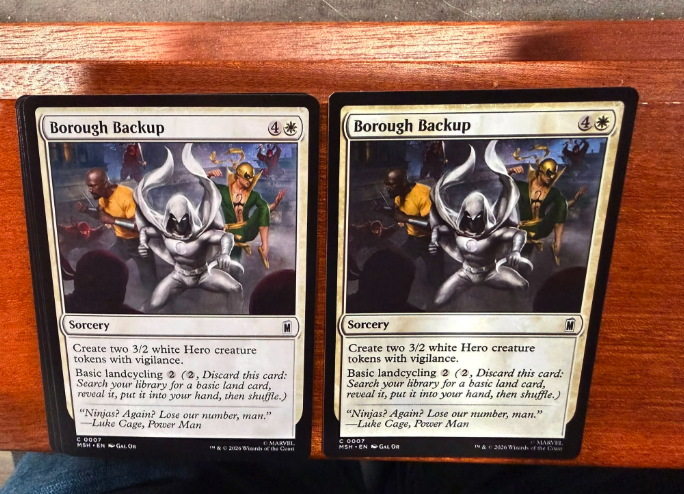
MTG Condition Abbreviations Explained
These are the condition labels you will see most often when buying, selling, and cataloging Magic cards.
| Abbreviation | Meaning | Plain-English definition |
|---|---|---|
| NM | Near Mint | Nearly unplayed. Minimal handling wear and only slight flaws. |
| LP | Lightly Played | Minor wear from handling, sleeving, or light play, with no serious structural issue. |
| SP | Slightly Played | Often used similarly to LP, especially outside TCGplayer terminology. |
| MP | Moderately Played | Noticeable wear, scratches, whitening, or small bends, but still sleeve-playable. |
| HP | Heavily Played | Heavy visible wear, major whitening, creasing, or many imperfections. |
| DMG | Damaged | Tears, water damage, writing, missing pieces, splitting, severe bends, or authentication/playability problems. |
Borderline Examples: What Condition Should You Pick?
These examples cover the common cases that make sellers and buyers disagree.
| What you see | Likely condition | Why |
|---|---|---|
| One tiny white dot on an otherwise clean edge | NM or LP | Often acceptable as NM, but LP is safer if selling without photos. |
| Several white dots on two or more edges | LP | The card is still attractive, but the wear is visible enough to disclose. |
| Light hairline scratch visible only when tilted | NM or LP | A slight scratch can fit NM; repeated or longer scratches should be LP. |
| Sleeve haze or binder scuffing on the back | LP | Surface scuffing shows handling even if the front looks clean. |
| Obvious edge whitening around much of the card | MP | Wear is no longer minor or isolated. |
| Any crease that changed the card structure | HP or Damaged | Creases are structural wear and should never be listed as NM or LP. |
| Water damage, writing, peeling, or missing material | Damaged | These defects affect integrity, value, or buyer trust. |
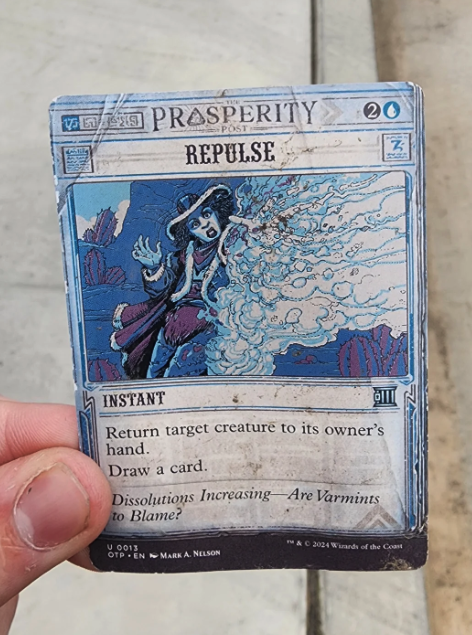
Why NM and LP overlap so much
Marketplace standards allow a small number of slight flaws in Near Mint cards, while Lightly Played starts with minor wear that may still look very clean. That creates a real gray zone. The practical solution is consistency: if the flaw is isolated and the card still looks nearly unplayed, NM can be fair. If the wear is noticeable, repeated, or likely to disappoint a buyer, choose LP.
Check the official TCGplayer condition standard
TCGplayer publishes condition definitions for Near Mint, Lightly Played, Moderately Played, Heavily Played, and Damaged cards, plus a more detailed standards PDF for sellers.
Read the TCGplayer condition overview →Remember that European labels differ
Cardmarket uses a different condition vocabulary, including Mint, Near Mint, Excellent, Good, Light Played, Played, and Poor. If you buy or sell in Europe, translate labels carefully instead of assuming every marketplace maps one-to-one.
Read the Cardmarket condition guide →Skip the manual work
Set condition during the scan instead of regrading later - your collection value, sell list, and trade decisions stay much more accurate.
Get Lotus Scan freeTrack Real MTG Value by Condition
Lotus Scan lets you scan cards, assign NM, LP, MP, HP, or Damaged condition, and keep your collection value closer to what buyers and buylists actually pay.
What the Community Says
The best LP card is the same condition as the worst NM card, so expect some fuzziness there.
Some sellers intentionally mark borderline Near Mint cards as Lightly Played because the price gap is small and buyer expectations are easier to satisfy.
Pro Tips
- Use LP as the default for cards that spent time in a deck, even if they were sleeved, unless they still look nearly pack fresh.
- Always inspect the back. A clean front with a marked or whitened back is not NM for selling purposes.
- Do not clean cards aggressively. A microfiber cloth can remove dust, but rubbing a surface can create new scratches.
- For cards over $20, take front and back photos before selling or trading. Photos settle most NM vs LP disagreements before they start.
- For Reserved List, old-border foils, and other expensive cards, small condition changes can move the price enough to justify professional photos or grading.