How to Tell If an MTG Card Is Fake (T-Test, Light Test, Green Dot)
A step-by-step guide to help you tell if an mtg card is fake (t-test, light test, green dot) quickly and accurately.
The counterfeit Magic card market has become increasingly sophisticated, with fakes that can fool experienced players at first glance. As card values have risen, so has the incentive for counterfeiters to produce convincing replicas of expensive staples. Knowing how to tell if an MTG card is fake protects you from losing money on trades, purchases, and collection building. This guide covers the three tests players trust most, the T-test, the light test, and the green dot check, plus weight and print-quality checks, and explains how scanning tools like Lotus Scan can add another layer of verification. Updated September 2026.
Step-by-Step Guide
Perform the light test
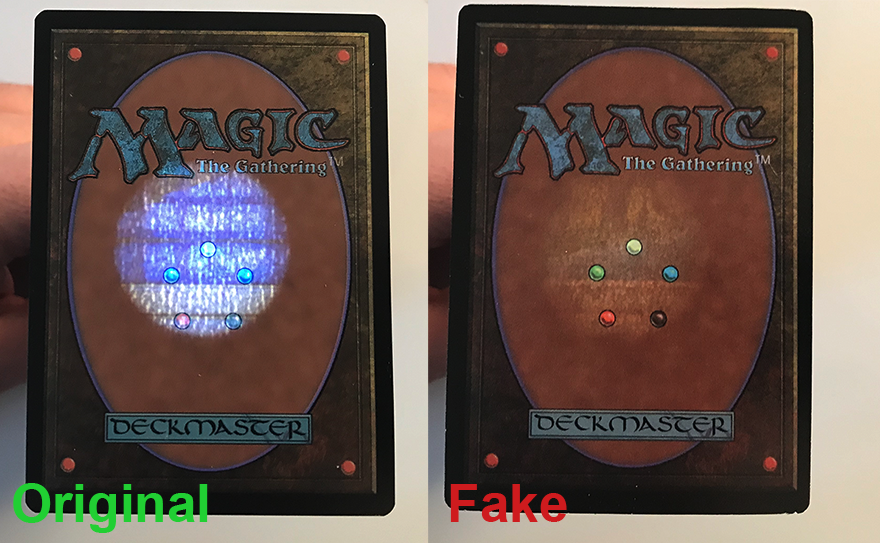
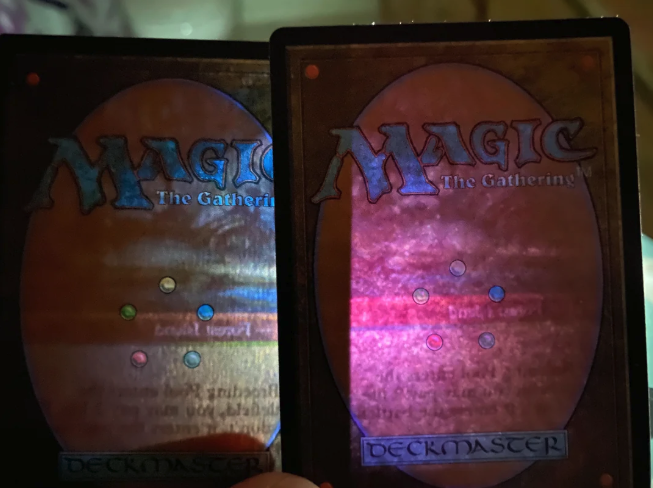
Hold the card up to a bright light source like a flashlight or phone light. Genuine Magic cards have a blue core layer sandwiched between the front and back printing layers, which gives them a distinctive dark blue appearance when light shines through. Counterfeit cards typically lack this blue core and will appear brighter, more translucent, or show a grayish tone instead of blue. This is one of the fastest and most reliable authentication tests you can perform and works on cards from every era of Magic's history. Practice on a card you know is genuine so you learn what the correct blue glow looks like.
Tip: The light test is most effective in a dark room with a focused light source like a phone flashlight rather than ambient room lighting.
Do the T-test on the back of the card
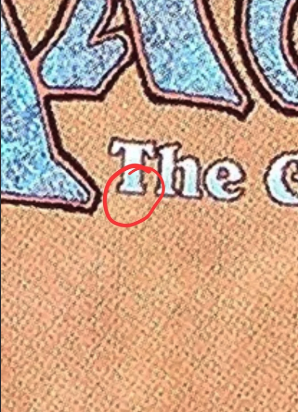
The T-test looks at the capital T in "The Gathering" on the back of the card, just under the Magic logo. Zoom in with a loupe or your phone camera and look at the edges of that T. On a genuine card, the bottom and right edges of the letter show a wavy, sawtooth-style line, a side effect of how the card back is printed. Fake cards typically do not show it, and their T edges look smooth or blurry instead. Check the suspect card next to one you know is real, and remember that better counterfeits sometimes copy the pattern, so treat the T-test as one strong signal rather than proof on its own.
Tip: Photograph the T with your phone zoomed in, next to a card you know is genuine. Side by side, the difference is far easier to see than from memory.
Use the green dot test with a loupe or magnifier
Get a jeweler's loupe or strong magnifying glass with at least 10x magnification and examine the green mana symbol on the back of the card. On genuine cards, the green dot is made up of a specific rosette print pattern of red, yellow, blue, and black dots that form the green color. On counterfeit cards, the dot pattern is usually blurry, shows visible ink bleeding, or uses a solid green color without the distinct dot pattern. This test requires a magnification tool but is considered one of the gold-standard methods for detecting fakes. You can buy a suitable loupe online for under ten dollars and it is an essential tool for anyone who buys or trades expensive singles.
Check the card weight and feel
Genuine Magic cards have a specific weight and flexibility that comes from their unique card stock. Hold the suspect card alongside a known genuine card of similar age and compare the feel. Real cards have a slight snap when you flex them gently, while many counterfeits feel either too stiff or too flimsy. The surface texture should feel smooth but not glossy or waxy, and the card should not feel slippery. Weight differences are subtle but noticeable if you handle cards frequently. Some collectors use precision scales to weigh cards, with genuine cards typically weighing around 1.7 to 1.8 grams each.
Tip: Compare the suspect card against a known genuine card from the same era. Card stock has changed over the years, so a genuine card from 2005 will feel different than one from 2023.
Examine print quality under magnification
Look closely at the card text, especially small text like the artist credit and copyright line. Genuine cards have crisp, clean text with no fuzzy edges or ink spreading. Counterfeits often show slightly blurred text, uneven ink density, or visible pixelation when magnified. Also check the black border of the card - genuine cards have a solid, even black border while fakes sometimes show a slightly off-black or inconsistent border color. The holographic security stamp on cards printed after Magic 2015 core set should feel slightly raised when you run your fingernail over it and should show a clean, sharp pattern under magnification.
Use a scanning app as an additional check
While no scanning app can definitively prove a card is real, Lotus Scan and similar tools can serve as a useful supplementary check. Scan the suspect card and compare the detected printing to what the card claims to be. If the scanner consistently fails to identify the card or matches it to the wrong printing, that can be a red flag worth investigating further. Counterfeit cards sometimes have subtle color differences or artwork sizing that confuses recognition algorithms trained on genuine card images. This is not a definitive test on its own, but combined with the physical tests above, it adds another layer of confidence to your authentication process.
Tip: If a card fails to scan repeatedly and you have concerns about its authenticity, do not complete the trade or purchase until you can perform the physical tests.
Know when to seek professional authentication
For high-value cards worth hundreds or thousands of dollars, consider professional authentication services like PSA, CGC, or Beckett. These services physically examine the card using industrial equipment and issue a grade with a tamper-proof case. The cost is typically $20 to $50 per card depending on the service level, which is a worthwhile investment for cards worth $200 or more. Professional grading also increases resale value and buyer confidence. If you are purchasing a high-value card from an individual seller, asking to see a professional grade or requesting the card be sent for grading before completing the sale is a reasonable and common practice.
Which test should you run first?
Start with the light test and the T-test. Together they take about a minute and need nothing more than a light and your phone camera. Add the green dot check with a loupe for anything you plan to pay real money for. If a card fails two tests, walk away.
Quick Authentication Checklist
Run down this list before you commit to a trade or purchase. Any single fail is a reason to slow down; two or more fails means walk away.
| Test | Genuine card | Likely counterfeit |
|---|---|---|
| Light test | Distinct dark blue glow when held to bright light | Bright, translucent, or grayish glow with no blue core |
| T-test (card back, "The Gathering") | Wavy, sawtooth-style edges on the bottom and right of the capital T | Smooth or blurry T edges with no sawtooth pattern |
| Green dot / rosette (10x loupe) | Rosette pattern of red, yellow, blue, and black dots | Blurry dot, ink bleeding, or a solid green fill with no pattern |
| Weight and flex | Slight snap when flexed gently, consistent weight ~1.7–1.8g | Feels too stiff, too flimsy, or noticeably lighter/heavier |
| Print quality under magnification | Crisp text, even ink density, solid black border | Blurred small text, uneven ink, or an off-black/inconsistent border |
| Holographic stamp (2015+ cards) | Slightly raised, sharp pattern under magnification | Flat, smudged, or missing entirely |
The Most Commonly Counterfeited MTG Cards
Counterfeiters target cards where the payoff justifies the effort. If you are buying, trading for, or grading any of these, run the full checklist above — no exceptions.
| Card | Why it gets faked | Extra caution |
|---|---|---|
| Black Lotus | The single most valuable Magic card ever printed | Only buy from established sellers with return policies or ask for professional grading first |
| Power Nine (Moxen, Ancestral Recall, Time Walk) | Reserved List cards with prices in the thousands | Compare card stock and weight against a known genuine card from the same era |
| Dual lands (Underground Sea, Volcanic Island, etc.) | High demand from Legacy and Vintage players, decades of reprint-free scarcity | Check the rosette pattern closely — old-border counterfeits are common |
| Sol Ring (early printings) | Nearly universal Commander staple with valuable early versions | Confirm the exact printing before assuming an old copy is the valuable one |
| Tarmogoyf (Future Sight) | High-value Modern and Legacy staple that gets targeted in bulk fakes | Watch for print quality issues in the small artist and copyright text |
Selling or valuing a Black Lotus?
Black Lotus is the single most counterfeited card in Magic. Before you buy, sell, or even estimate a value, see current market pricing and what genuine copies actually sell for.
Check Black Lotus prices →Lotus Scan Flags Suspicious Cards Automatically
Lotus Scan's AI detects cards with unusual print patterns, helping you spot fakes faster than manual inspection.
What the Community Says
Bought what I thought was a genuine dual land at a convention. Light test showed no blue core the second I got home. Should have checked before handing over cash, not after.
The rosette pattern under a loupe is the test that never fails me. Solid green fill with no dots means fake, every single time I have checked. Ten-dollar loupe, best purchase for anyone buying vintage cards.
Weight alone is not enough — I have handled genuine cards that felt off because of age and storage. Use it as a tiebreaker with the other tests, not as your first check.
Pro Tips
- Buy expensive singles from established sellers with return policies whenever possible. Reputable stores on TCGPlayer and Card Kingdom authenticate cards before listing them.
- Be extra cautious with Reserved List cards and old-border staples like dual lands. These are the most commonly counterfeited cards because of their high value and the difficulty of comparing them to recent printings.
- If you discover a counterfeit, report the seller to the platform where you purchased it. This protects other buyers in the community.
- Keep a known-genuine card from several eras in a reference sleeve so you always have a comparison card available for the light test and feel test.
- The water test, where you drop water on the card, does work to detect some fakes but it damages the card. Only use it as a last resort on inexpensive cards you are testing for educational purposes.